

- Easy Aussie Migration
- May 29, 2026
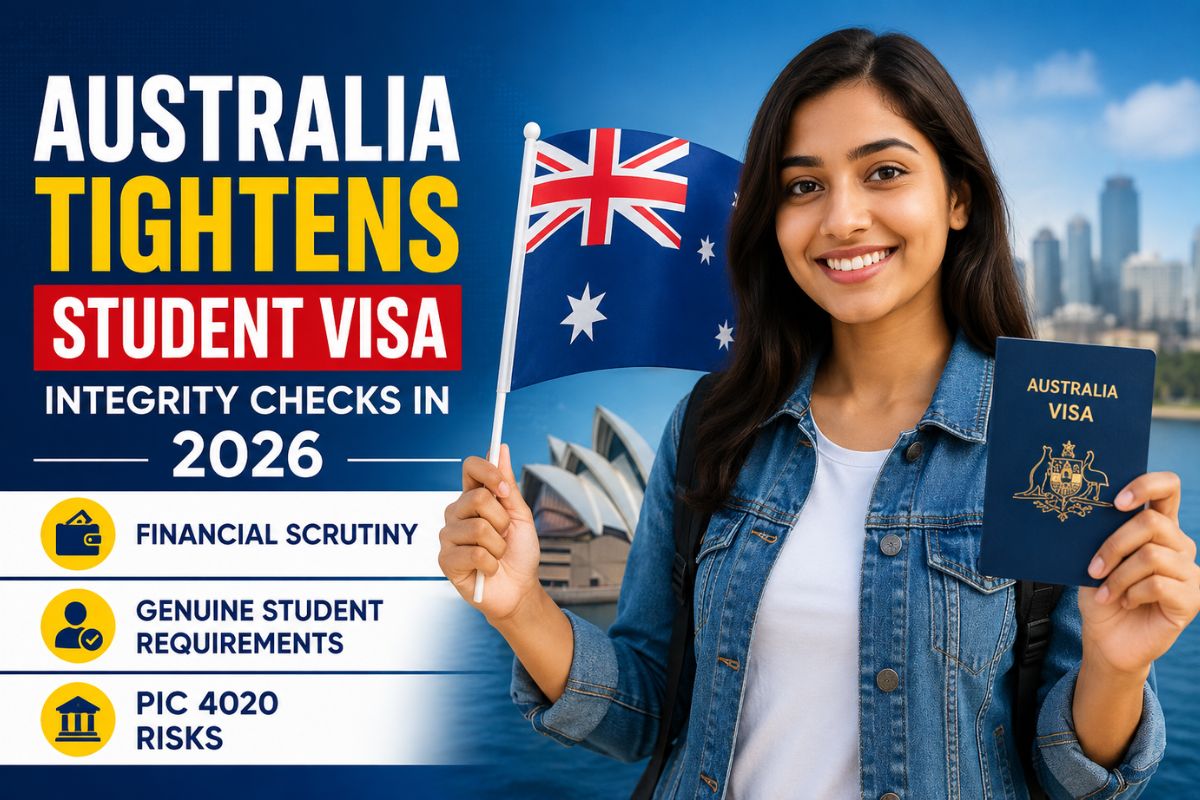
Australia Tightens Student Visa Integrity Checks in 2026: Financial Scrutiny, Genuine Student Requirements and PIC 4020 Risks
Share Now:
The Australian Government has confirmed in the 2026 to 2027 Federal Budget that it will spend a total of $167.4 million over four years to strengthen Australia’s migration system and visa integrity framework. As part of this package, approximately $19.8 million has been allocated specifically for enhanced scrutiny of both onshore and offshore student visa applications.
This means international students should now expect stricter visa assessment procedures, enhanced financial scrutiny, detailed background checks, and increased compliance monitoring by the Department of Home Affairs.
This is particularly important for students from countries such as Bangladesh, India, Nepal, and Pakistan, where student visa applications are often carefully assessed due to concerns surrounding document authenticity, source of funds, course progression, and genuine student intention.
What is a Visa Integrity Check?
A visa integrity check is a detailed screening and verification process conducted by the Department of Home Affairs to assess whether a visa application is genuine, lawful, and supported by authentic information and documents.
The purpose of an integrity check is to:
- Detect fake or misleading documents
- Identify identity fraud and misrepresentation
- Verify academic qualifications and employment claims
- Confirm genuine access to financial capacity
- Assess whether the applicant genuinely intends to comply with Australian visa conditions
- Identify high risk applications and non genuine migration pathways
- Protect the integrity of Australia’s migration system and national security
The Department has broad powers and various practical methods to verify the authenticity of documents and information submitted with a visa application. This may include direct verification with:
- Universities and colleges
- Employers
- Banks and financial institutions
- Government authorities
- Taxation authorities
- Educational boards and institutions
Main Areas Commonly Checked in Student Visa Applications
1. Document Authenticity
The Department carefully checks whether the documents submitted with the visa application are genuine and verifiable. These documents may include:
- Academic certificates and transcripts
- Employment reference letters
- Payslips and salary records
- Tax documents
- Bank statements and fixed deposits
- Birth certificates and identity documents
- Relationship evidence
- Sponsorship documents
If any document appears inconsistent, altered, fabricated, or unverifiable, the Department may refuse the visa application.
2. Genuine Student (GS) Requirement
The Department also assesses whether the applicant satisfies the Genuine Student (GS) requirement. This is an important legal requirement for Australian student visa applicants and is designed to ensure that the student visa program is used for genuine study purposes. This includes considering:
- The relevance of the course to previous education or career
- Future career prospects
- Previous immigration history
- Study progression
- Previous visa compliance
- Reasons for choosing Australia and the course provider
- Whether the applicant appears to be using the student visa primarily for migration or work purposes
The Department considers whether the applicant genuinely intends to stay in Australia temporarily for the purpose of study and whether the chosen course is consistent with the applicant’s education background, career pathway, and future plans.
For onshore student visa extension applicants, this becomes even more important.
The Department may check:
- Attendance records
- Academic progression
- Semester results
- Whether the student has genuinely participated in studies
- Whether the student has maintained enrolment
- Whether there are repeated course changes or provider transfers
Another important factor is AQF level progression. In most situations, students should avoid moving to a lower AQF level course after entering Australia unless there is a very strong and reasonable explanation.
For example, if a student entered Australia to study an AQF Level 9 Master degree, moving down to an AQF Level 8 Graduate Diploma or Graduate Certificate may raise concerns, unless there is a strong and reasonable explanation.
3. Financial Capacity and Source of Funds
One of the most sensitive areas in student visa applications is financial capacity. The Department wants to know:
- Whether the funds genuinely exist
- Whether the funds are legally obtained
- Whether the sponsor genuinely has access to the funds
- Whether the funds are readily available for the student’s education and living expenses
The Department does not simply look at the bank balance. They also want to understand:
“Where did the money come from?”
Source of Funds Concerns for International Student Visa Applicants
Many international students show large amounts of money in their sponsor’s bank accounts or fixed deposits shortly before visa lodgement. However, in many cases, applicants are unable to clearly explain the source of those funds. To explain the source of funds, applicants often provide:
- Land sale documents
- Tenancy agreements
- Business income documents
- Agricultural income records
- Loan arrangements
The Department has raised concerns in many cases where:
- Land sale documents are incomplete or recently prepared
- There is no proper money trail
- Funds suddenly appear in bank accounts
- Documents are inconsistent with banking history
- Tax compliance is unclear
- The documents appear created only for visa purposes
This does not mean land sale documents are automatically unacceptable. However, applicants must ensure that the evidence is genuine, properly supported, and consistent with the overall financial history of the sponsor.
Better Financial Evidence to Support a Student Visa Application
Students should ideally provide stronger and more transparent financial evidence, including:
- Long term savings history
- Fixed deposits held over a reasonable period
- Regular salary income
- Genuine business income supported by tax documents
- Education loans from recognised financial institutions
- Income tax returns
- Bank transaction history
- Proof of assets and investments
If land sale funds are being used, applicants should ideally provide:
- Registered sale deed
- Proof of payment
- Bank transaction records
- Land ownership records
- Explanation of the transaction
- Tax related evidence where available
Why Students Must Be Careful with Supporting Documents
If the Department is not satisfied with the genuineness of documents or information provided, the application may face delays, requests for further information, refusal concerns, or further integrity assessment. Providing incorrect or misleading information may create serious immigration consequences under Australian migration law. Students should therefore ensure that:
- All documents are genuine and consistent
- Financial evidence can be clearly explained
- Information provided in forms and statements is accurate
- There are no unexplained discrepancies between documents
Students should understand that the Department of Home Affairs now conducts detailed verification checks on many student visa applications. Even minor inconsistencies between bank statements, tax documents, employment records, sponsorship evidence, and source of funds explanations may raise concerns during visa assessment. Applicants should not assume that they will avoid responsibility simply because a third party, education consultant, or sub agent prepared the documents.
What is Public Interest Criterion 4020?
Public Interest Criterion 4020, commonly known as PIC 4020, is a provision under Australian migration law relating to false or misleading information and bogus documents.
PIC 4020 may apply where an applicant:
- Provides fraudulent documents
- Submits false information
- Provides misleading information
- Fails to disclose relevant information
- Relies on fake employment, financial, academic, or identity documents
A “bogus document” means a document that is fake, altered, fraudulently obtained, or contains false information.
When Does PIC 4020 Apply?
PIC 4020 usually applies during visa processing when the Department identifies concerns about the documents or information submitted with the application.
However, even if a visa is granted, the Department may later investigate and cancel the visa if fraudulent information is discovered after grant.
This means immigration problems may continue even years later if the Department finds that false documents were used.
What Happens if PIC 4020 Applies?
If PIC 4020 applies, the consequences can be very serious and may affect a person’s future migration pathway for several years. These may include:
- Visa refusal
- Visa cancellation
- A 3 year exclusion period for many Australian visas
- Damage to future migration prospects
- Complications for dependent family members
- Difficulties obtaining visas for other countries
The Department may also issue a procedural fairness letter requesting an explanation before making a decision.
In more serious situations involving identity fraud, repeated misconduct, or significant deception, the immigration consequences may become even more complex and long lasting.
Common Student Visa Integrity Risks to Avoid
International students should also be careful about:
- Non genuine work experience documents
- Fake payslips
- Fake IELTS or English documents
- Excessive work breaches
- Ghost colleges or non genuine providers
- Unexplained course hopping
- Inconsistent immigration history
- Using unregistered advisers or agents
- Incorrect information provided by third parties
Students should always review every document carefully before submission.
Final Thoughts
Australia remains one of the world’s leading destinations for international education. However, the visa system is becoming increasingly integrity focused.
Genuine students should not panic. However, they should understand that proper preparation, truthful information, and strong supporting evidence are now more important than ever.
A strong student visa application should clearly demonstrate:
- Genuine study intention
- Logical course progression
- Genuine financial capacity
- Transparent source of funds
- Compliance with Australian visa conditions
- Authentic and verifiable documents
If you are concerned about your visa situation or there are issues relating to your documents, source of funds, study progression, or immigration history, it is strongly recommended that you seek proper professional advice from a Registered Migration Agent or qualified immigration lawyer before lodging your application.
A small mistake or incorrect document may create serious long term immigration consequences.
In the current immigration environment, transparency, consistency, and genuine documentation are no longer optional. They are essential.
Disclaimer
This article contains general information only and should not be considered legal advice. Immigration laws and policies may change over time and professional advice should be sought based on individual circumstances.