


- Easy Aussie Migration
- May 23, 2026
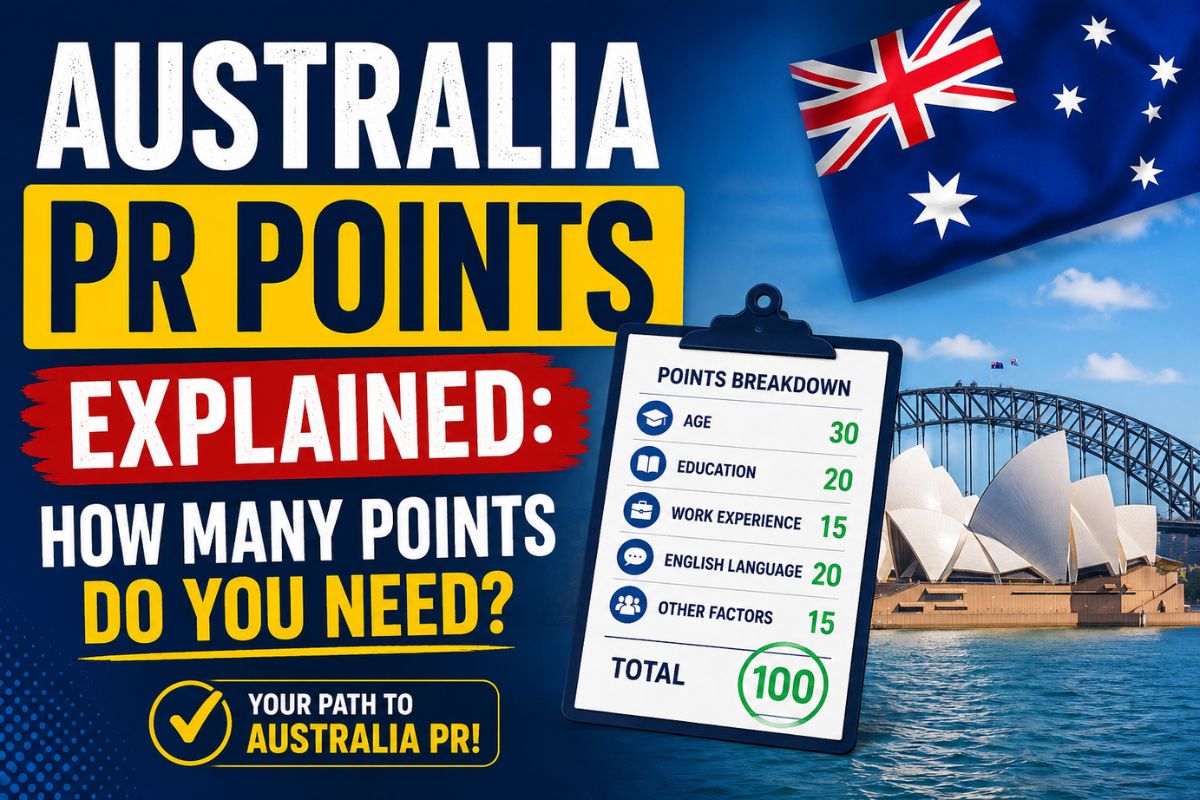
Australia PR Points Explained: How Many Points Do You Need?
Share Now:
Australia remains one of the most popular destinations for skilled migrants looking for better career opportunities, quality education, healthcare benefits, and a high standard of living. One of the most common pathways to Australian Permanent Residency (PR) is through the skilled migration program, which uses a points-based system to assess applicants.
If you are planning to migrate to Australia, understanding how the PR points system works is essential. Many applicants often ask: “How many points do I need for Australia PR?” The answer depends on several factors, including your age, qualifications, work experience, English proficiency, and the visa subclass you apply for.
In this guide, we’ll explain how the Australia PR points system works, how points are calculated, and what you can do to improve your chances of receiving an invitation.
What Is the Australia PR Points System?
Australia’s skilled migration program uses a points test to rank applicants for certain skilled visas. The system is designed to attract migrants who can contribute to the Australian economy and workforce.
To apply for most skilled migration visas, you must first submit an Expression of Interest (EOI) through the SkillSelect system. Your points score determines how competitive your application is compared to other applicants.
The higher your score, the better your chances of receiving an invitation to apply for permanent residency.
What Is the Minimum PR Points Requirement?
Currently, the minimum points required to be eligible for skilled migration is 65 points. However, scoring 65 points does not guarantee an invitation.
In reality, many occupations require much higher scores due to strong competition. For popular occupations such as accountants, software engineers, nurses, and IT professionals, invitation rounds often favor candidates with 80–95+ points.
Your required score depends on:
- Your occupation
- Demand for your profession in Australia
- Visa subclass
- Number of applicants in the occupation category
- State nomination opportunities
Which Visas Use the Points System?
The points test mainly applies to these skilled migration visas:
Skilled Independent Visa (Subclass 189)
This visa allows skilled workers to live and work anywhere in Australia permanently without sponsorship from a state or employer.
Skilled Nominated Visa (Subclass 190)
This visa requires nomination by an Australian state or territory government. State nomination also gives you additional PR points.
Skilled Work Regional Visa (Subclass 491)
This is a provisional visa for skilled workers willing to live and work in regional Australia. It also provides extra points through state or family sponsorship.
How Are Australia PR Points Calculated?
Australia PR points are calculated based on several categories. Here’s a breakdown of the most important factors.
1. Age
Age plays a major role in the points test because Australia prioritizes younger skilled workers.
Age Points Table
- 18–24 years: 25 points
- 25–32 years: 30 points
- 33–39 years: 25 points
- 40–44 years: 15 points
- 45 years and above: 0 points
Applicants between 25 and 32 years receive the highest points.
2. English Language Proficiency
English test results significantly affect your PR score. Accepted tests include IELTS, PTE Academic, TOEFL iBT, and others approved by the Australian government.
English Points
- Competent English: 0 points
- Proficient English: 10 points
- Superior English: 20 points
Achieving higher English scores is one of the fastest ways to improve your PR points.
3. Skilled Work Experience
Points are awarded for both overseas and Australian work experience in your nominated occupation or a related field.
Overseas Work Experience
- Less than 3 years: 0 points
- 3–4 years: 5 points
- 5–7 years: 10 points
- 8+ years: 15 points
Australian Work Experience
- Less than 1 year: 0 points
- 1–2 years: 5 points
- 3–4 years: 10 points
- 5–7 years: 15 points
- 8–10 years: 20 points
Australian work experience generally attracts more points than overseas experience.
4. Educational Qualifications
Your highest completed qualification also contributes to your total score.
Education Points
- Doctorate degree: 20 points
- Bachelor degree or Master degree: 15 points
- Diploma or trade qualification: 10 points
- Recognized Australian qualification: 10 points
Your qualification must usually be assessed by the relevant skills assessment authority.
5. Australian Study Requirement
If you completed at least two academic years of study in Australia, you may receive additional points.
Australian Study Points
- Minimum two years study in Australia: 5 points
This is especially beneficial for international students studying in Australia.
6. Specialist Education Qualification
Applicants with a Master’s by research or Doctorate in STEM fields from an Australian institution may receive extra points.
STEM Qualification Points
- Eligible specialist education qualification: 10 points
7. State Nomination or Sponsorship
State nomination can significantly improve your overall score.
Nomination Points
- State nomination (Subclass 190): 5 points
- Regional sponsorship (Subclass 491): 15 points
For many applicants, state nomination becomes the key to securing an invitation.
8. Partner Skills
You may also receive points based on your partner’s qualifications and English ability.
Partner Points
- Skilled partner with competent English: 10 points
- Partner with competent English only: 5 points
- Single applicant: 10 points
Single applicants now receive additional points, which has improved opportunities for independent migrants.
9. Community Language Skills
If you are accredited in a community language through NAATI (National Accreditation Authority for Translators and Interpreters), you may receive extra points.
Language Points
- NAATI accreditation: 5 points
This is common among multilingual applicants.
Example of PR Points Calculation
Here’s an example of how points may be calculated:
- Age 29: 30 points
- Superior English: 20 points
- Bachelor degree: 15 points
- Overseas work experience (5 years): 10 points
- Single applicant: 10 points
- State nomination (190 visa): 5 points
Total Score: 90 Points
A score like this would generally be highly competitive in many occupations.
How Many Points Do You Actually Need?
Although 65 points is the minimum eligibility requirement, invitation scores are usually much higher.
Competitive Score Ranges
- 65–70 points: Possible but less competitive
- 75–85 points: Good chance for many occupations
- 90+ points: Very competitive
Highly demanded occupations often require lower points, while oversubscribed professions may need significantly higher scores.
How to Increase Your Australia PR Points
If your current score is low, there are several ways to improve it.
- Improve Your English Score: Achieving superior English can add 20 points and dramatically improve your ranking.
- Apply for State Nomination: Many Australian states offer nomination pathways for occupations in demand.
- Gain More Work Experience: Additional years of skilled employment can increase your score over time.
- Complete Australian Study: Studying in Australia can provide both qualification points and Australian study points.
- Include Partner Skills: If your spouse or partner meets the eligibility criteria, you may gain extra points.
- Consider Regional Pathways: Regional visas often offer more opportunities and additional points.
Why Professional Migration Advice Matters
Australia’s migration system changes regularly, and visa rules can be complex. Many applicants make mistakes with skills assessments, English requirements, or documentation that can delay or affect their application.
A registered migration agent can help:
- Assess your eligibility
- Calculate your PR points accurately
- Identify suitable visa pathways
- Assist with state nominations
- Prepare and lodge your visa application correctly
Professional guidance can improve your chances of success and help avoid costly errors.
Final Thoughts
Australia’s PR points system is designed to select skilled migrants who can contribute to the country’s workforce and economy. While the minimum requirement is 65 points, most applicants need much higher scores to receive an invitation.
Understanding how points are calculated allows you to plan strategically and improve your chances of achieving permanent residency. Whether through better English scores, state nomination, or additional work experience, every point can make a difference.
If you’re considering applying for Australian PR, speaking with an experienced migration agent can help you understand your options and create the strongest possible application pathway.